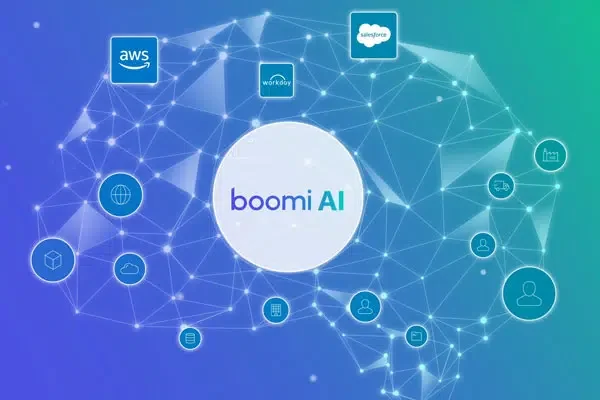


Power the future of your business with intelligent integration and automation
Connect your applications, data, and people to accelerate your digital transformation.







Why Boomi
Don’t get stuck in the modernization chokepoint. Boomi is the faster alternative to complex, heavyweight suites and lightweight point solutions that can’t deliver what’s next in your digital transformation journey.
Explore Why Boomi- Applications
- Functions
- Industries
- Initiatives
Applications
-

Salesforce
Increase the value of your digital ecosystem.
-

NetSuite
Enhance the efficiency and power of NetSuite.
-

SAP
Connect your third-party systems and data to SAP.
-

Workday
Unlock the full power of Workday.
-

Amazon Web Services
Accelerate the value of your Amazon services.
-

ServiceNow
Enhance ServiceNow capabilities and increase business value.
-

Slack
Easily monitor critical business information in Slack.
-
View all connectors
Explore over 300K app connections.


Functions
-
Finance
Improve financial visibility, accuracy, and customer experiences.
-
Human Resources
Provide seamless onboarding and better employee experiences.
-
Information Technology
Say “yes” to the business and run at digital speed.
-
Marketing
Fuel your marketing engine at every touchpoint.
-
Analytics
Improve decisions and control costs with data-driven insights.
-
Sales
Optimize sales processes to close deals with confidence.
-
Support
Provide support and service that delights your customers.
Industries
-
Financial Services
Deliver exceptional customer experiences, online and offline.
-
Healthcare & Life Sciences
Accelerate your digital transformation for a patient-centric view that improves medical outcomes.
-
Manufacturing
Improve operational efficiency with shared transparency across all parties.
-
Retail
Harness your data to deliver unique and differentiated customer journeys.
-
Public Sector
Provide quick, easy access to accurate information and services that meet the high expectations of citizens.
-
Higher Education
Build a connected digital campus.
Initiatives
-
Workforce Agility
Connect your distributed employees and contractors.
-
DevOps
Balance productivity and control to deliver innovation at speed.
-
Cloud Migration
Migrate, modernize, and connect your business into the cloud.
-
M&A and Divestiture
Capture deal values faster, on repeat.
-
Integration Center of Excellence
Build integrations faster and better.
-
Compliance
Fragmented data causes delay in compliance insights.
-
Customer 360
Deliver a comprehensive view of your customers.
-
ERP Modernization
Connect your composable ERP faster.
Our platform
Move forward with the only intelligent integration and automation solution so you can focus more on innovation and less on maintenance. The Boomi platform is self-managing, self-learning, and self-scaling.
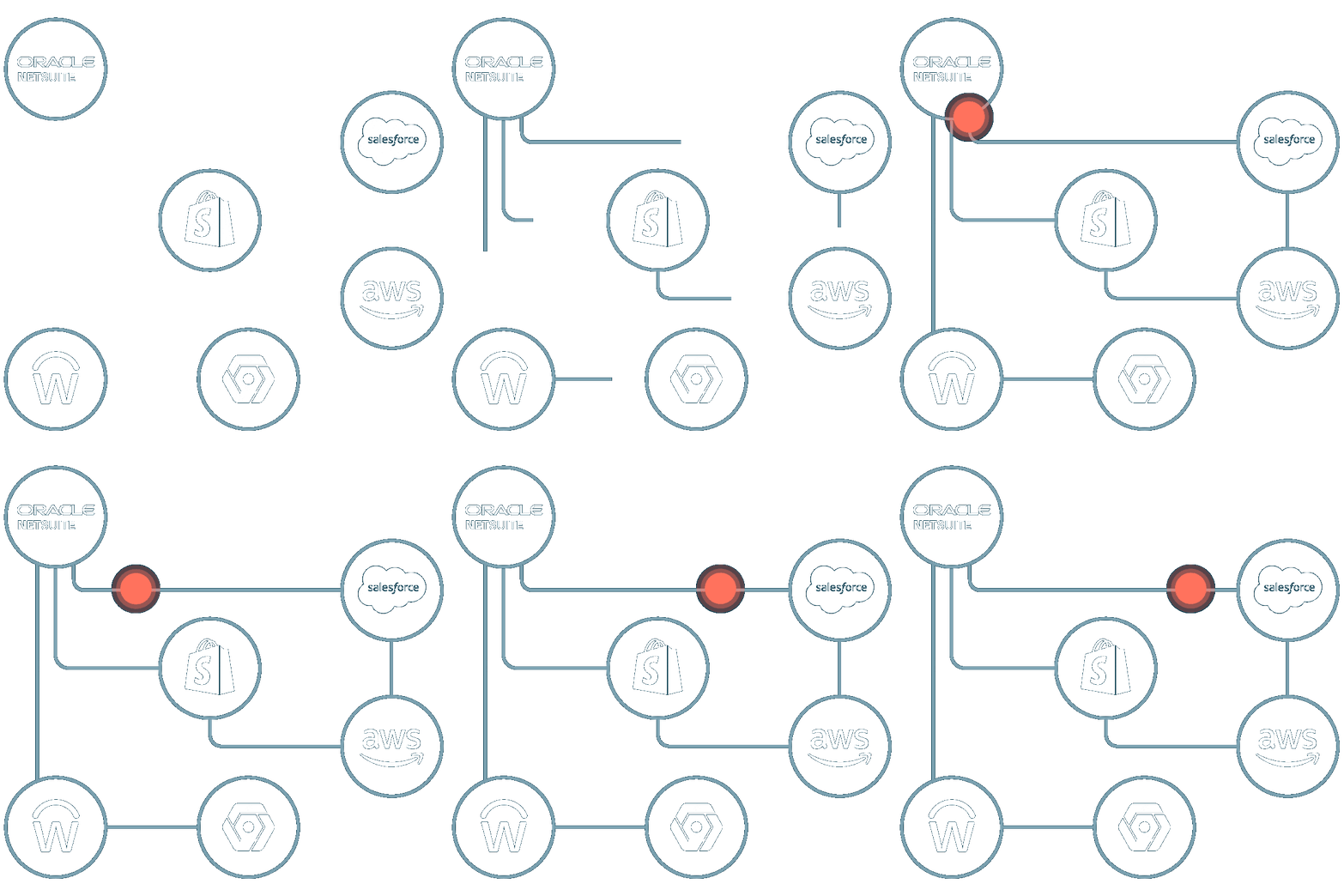
Instantly connect apps, people, and things.
Discover and synchronize data.
Automate workflows and processes.
Meet the companies putting our solutions to work




More than a platform
A complete ecosystem to help you succeed.
-

Community
Engage with 100K+ users & 12.5K+ certified trained experts.
-

Partners
Extend the value of your investment with our 800 premier partners.
-

Customer success
Get personalized care, at every step of your journey.
-

Professional services
Benefit from years of expertise and best practices from the founders of iPaaS.


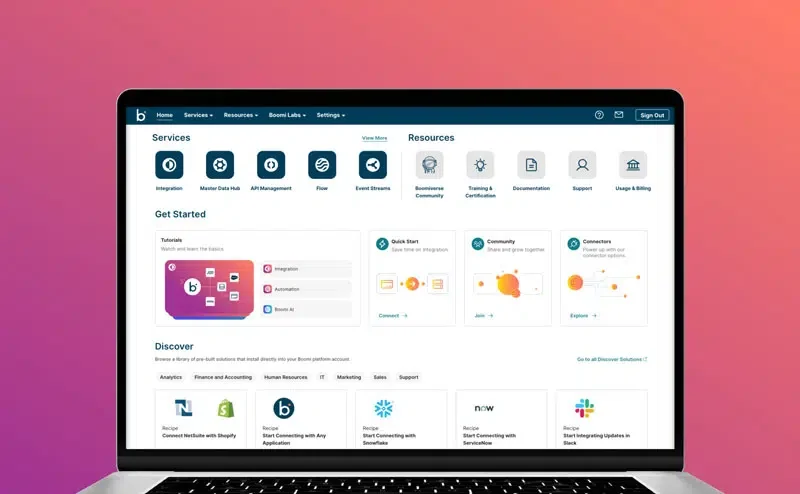
Get started with intelligent integration and automation.
Sign up for a tailored demo and discover how Boomi can revolutionize your business.
Ready to try Boomi for yourself? Start your free 30 day trial